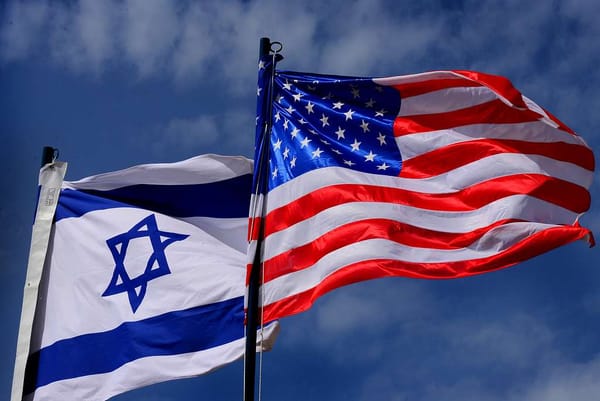
Israel's Push for a 20-Year US Security Aid Deal: What We Know So Far
This proposed deal would lock in multi-billion-dollar annual commitments, estimated at $4 billion or more per year...


As the current 10-year US-Israel Memorandum of Understanding (MOU) on military aid—signed in 2016 and providing approximately $3.8 billion annually—approaches its expiration in 2028.
Reports emerged in November 2025 that Israel is seeking an unprecedented extension: a 20-year agreement potentially running through 2048, coinciding with Israel's centennial.
This proposed deal would lock in multi-billion-dollar annual commitments, estimated at $4 billion or more per year, while incorporating "America First" elements to appeal to the Trump administration and skeptics of foreign aid.
The Proposed Changes
According to sources cited in reports from Axios, The Times of Israel, and Jewish Insider:
- Duration: Extending from the traditional 10 years to 20 years.
- Funding Structure: Maintaining or increasing the baseline Foreign Military Financing (FMF) and missile defense funding, but redirecting portions toward joint US-Israel research and development (R&D) in areas like defense technology, military AI, and advanced missile defense systems (e.g., the proposed "Golden Dome").
- Rationale: These tweaks frame the aid as mutually beneficial, boosting US jobs and capabilities since much of the funding is already spent on American-made equipment.
Initial discussions resumed in recent weeks after delays due to regional conflicts, with Israel aiming to finalize a deal within the next year.
Israel's Qualitative Military Edge (QME)
The US commitment to Israel's Qualitative Military Edge—ensuring superiority over regional adversaries—is already codified in law (e.g., 2008 Naval Vessel Transfer Act). The new MOU would indirectly reinforce this by funding co-developed systems like Iron Dome.
However, no reports indicate plans to further entrench QME in new statutory language at this time. Critics argue a long-term deal could implicitly bind future administrations without additional oversight.
Current Status
- No formal agreement has been reached.
- Negotiations are in early, informal stages.
- Prime Minister Benjamin Netanyahu publicly denied the reports in November 2025, stating his "direction is the exact opposite" and emphasizing Israel's push for greater independence amid its strong economy and defense industry.
- Despite the denial, experts and sources suggest backchannel efforts continue.
Supplemental US aid has flowed steadily, with billions approved in 2025 for munitions replenishment and missile defense, separate from the long-term MOU.
Reactions and Challenges
The proposal has elicited mixed responses amid declining US public support for Israel:
- Pro-Israel Advocates (e.g., AJC, JINSA, FDD): View it as essential for shared security, job creation in the US, and countering threats like Iran.
- America First Critics (MAGA-aligned voices): Label it "America Last," questioning subsidies for a capable ally.
- Progressive and Restraint-Oriented Groups (e.g., Mondoweiss, Stimson Center, CIP): Oppose extension, citing concerns over accountability and calling for phased reductions.
- Analysts: Note political hurdles from foreign aid skepticism in the GOP and bipartisan Gaza-related concerns. Some urge Israel toward true partnership over dependency.
Historical US aid to Israel exceeds $174 billion (non-inflation-adjusted) since 1948, with the current MOU representing the largest single pledge.
Looking Ahead
With US politics volatile and regional dynamics shifting, the outcome remains uncertain. A longer MOU could signal enduring commitment—or spark debate over evolving the relationship toward greater Israeli self-reliance and equitable cooperation.
This story is developing. As negotiations progress (or stall), it will test the resilience of the US-Israel alliance in a new era.